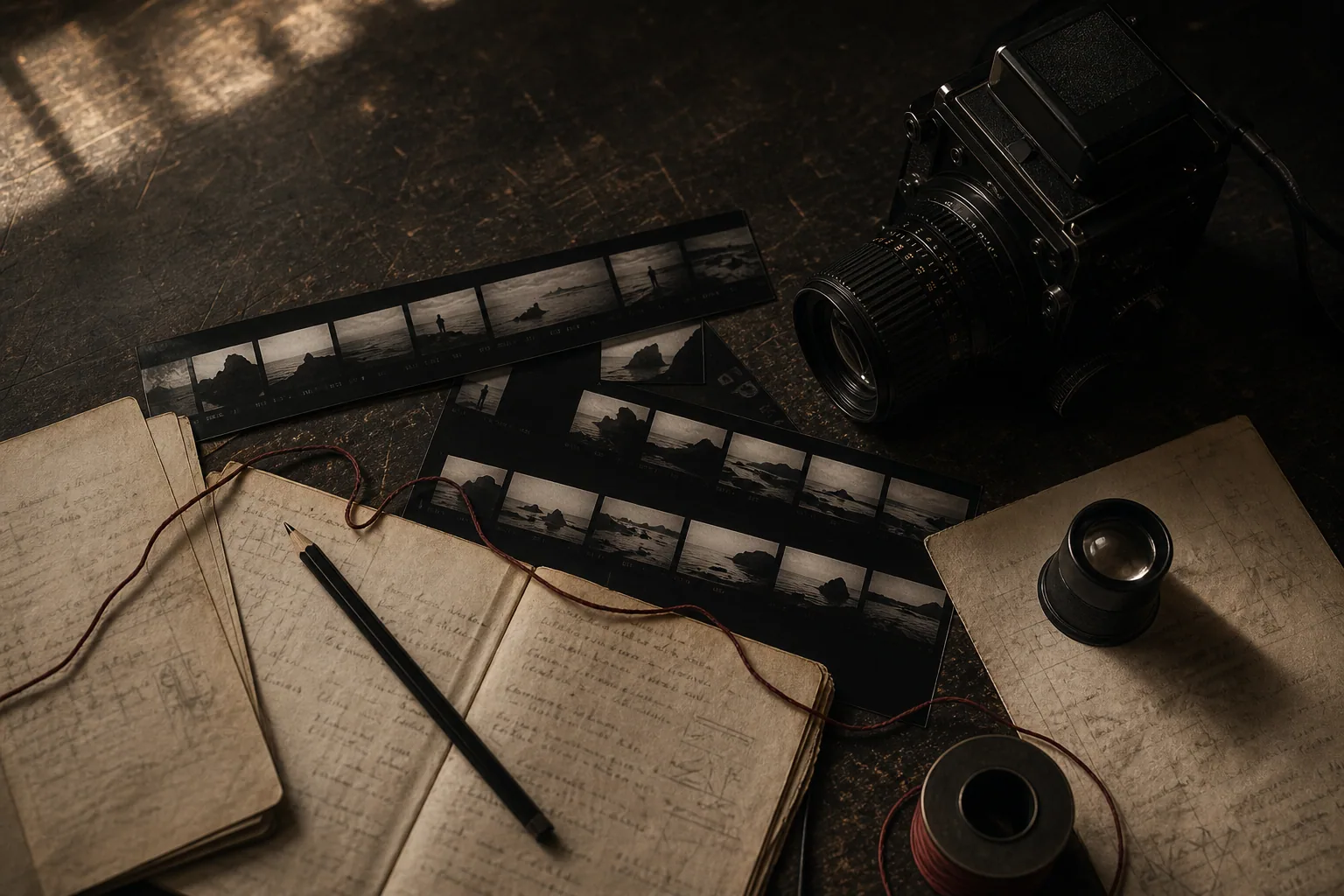
Natural light is often described as a limitation. In practice, it is a collaborator with a very specific sense of timing.
“A location reveals its rhythm only after the first plan has been set aside.”
We begin most location days without unpacking the camera. The first task is simply to watch: where light enters, which surfaces return it and how quickly a bright area falls into shadow.
This waiting is not passive. It produces a map of the day. A narrow beam may last seven minutes; reflected water may soften a portrait more effectively than any fixture we carried.
Once the rhythm is understood, direction becomes quieter. Subjects move through a space rather than toward a mark, and the frame keeps some of the uncertainty that made the place worth photographing.
KAGE Studio · Field Notes